Her husband, Joey, and their two children — a high school senior and a young daughter — were counting the minutes until her return from deployment in Kuwait. The text messages between Nicole and her husband were full of the ordinary exchanges that couples have when they’re waiting to be reunited after a long time apart. Everyday conversations. Excitement. Plans for the future.
But as the hours passed, the messages stopped.
“She always answered,” Joey said, holding back tears. “No matter how busy she was… she always answered.” Their last text exchange was one of anticipation. Then, the silence.
It’s moments like these that serve as painful reminders: for the families waiting at home, the war doesn’t truly end on the battlefield. It ends in the void — in the silence of an unanswered message.
A Soldier, A Mother, A Wife — And A Light In Her Community
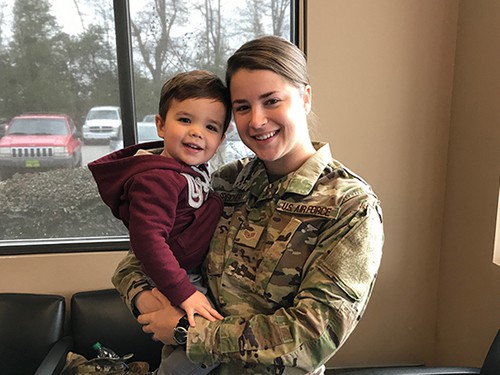
Nicole was more than just a soldier. She was the mother who could always be found planting vegetables in her backyard with her children, teaching them about patience and growth. She was the wife who shared quiet moments with her husband, cooking dinner and making memories. She was the woman who laughed as she roller-skated with her little girl, showing her the joy of family, love, and togetherness.
Beyond her military uniform, Nicole was a woman deeply connected to her community. In White Bear Lake, Minnesota, where she and her family lived, she was known for her involvement in local events. She attended every school function, volunteered whenever she could, and was a familiar face at neighborhood gatherings. To her friends and neighbors, she was a beacon of warmth, kindness, and strength.
Her love for her family and community was clear to all who knew her. It was evident not just in her professional life as a soldier but also in the way she lived her day-to-day life — planting flowers, spending time with her children, and creating lasting memories in her home.
The Deployment That Should Have Been Her Last
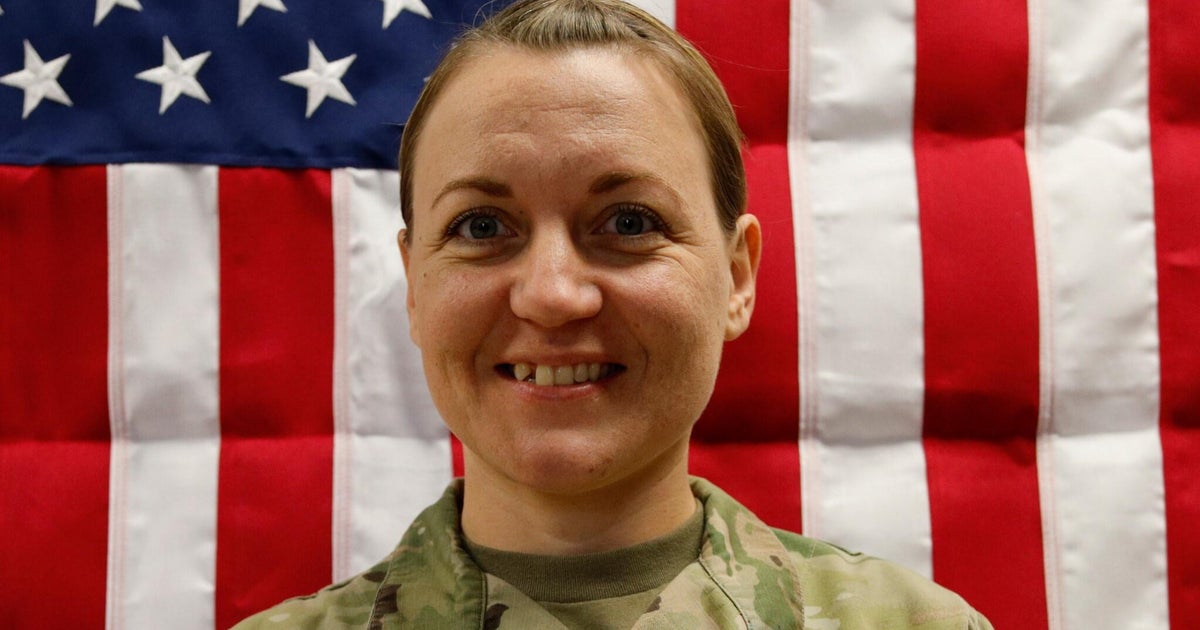
Nicole’s career spanned over two decades — first in the National Guard and later in the Army Reserve. By the time she deployed to Kuwait, she had already served in various roles, providing logistical support and guidance in different operations. Her time away from home had become routine, but her family had grown accustomed to it. They knew the sacrifices that came with being a military family.
In the months leading up to her deployment, Nicole looked forward to returning home. She had completed her mission and was ready to reunite with her family.
The deployment to Kuwait was supposed to be just another chapter in a long and successful career. Nicole was stationed at the Port of Shuaiba, where she helped coordinate critical support services for U.S. military forces in the region. But as tensions in the Middle East escalated, the situation rapidly changed.
In early March 2026, the United States, in coordination with Israel, began military operations against Iran, which set off a series of rapid escalations in the region. On March 1, 2026, just days before she was scheduled to return home, an Iranian-backed drone strike hit a U.S. military base in Kuwait, targeting a command center where Nicole and her fellow soldiers were stationed.
In a split second, everything changed. Nicole was among six U.S. service members who lost their lives in the strike, ending what was supposed to be a routine deployment with a tragic, unforeseen end.
The Final Messages And The Silence That Followed
Her husband, Joey, and their children had been eagerly awaiting her return. The couple’s last text messages were filled with the ordinary things: plans to pick up groceries, thoughts on what to do when Nicole got home, and anticipation of reuniting.
But after that final exchange, Nicole’s messages stopped.
Nicole was always a steady presence in her family’s lives, keeping in touch despite the chaos that came with being a soldier deployed overseas. But when she didn’t respond that night, her husband knew something was terribly wrong.
“She always answered. No matter what was going on, no matter how busy she was, she always answered.”
Joey never got that last reply. And the silence that followed would become the most painful reminder of a life cut short. For the Amor family, the loss was not just a sudden tragedy but a profound void — one that left them in an uncertain world where no more texts would come, and no more phone calls would ring.
Remembering The Fallen, One By One
Nicole’s death was not an isolated incident. She was one of six U.S. soldiers who perished in that tragic drone strike. Soldiers from Iowa, Florida, Nebraska, California, and other parts of the United States also lost their lives, each one carrying with them unique stories of service and sacrifice. They were not just soldiers; they were fathers, mothers, sons, and daughters — people who had lives outside of the military and had dreams for their futures.
They were part of the 103rd Sustainment Command, a group of citizen-soldiers who balanced civilian life with military duties. This loss impacted more than just their immediate families; it struck communities across the United States.
While the nation paid its respects to these fallen heroes, the families who loved them were left with memories and unanswered questions, as the news of their deaths spread quickly.
Dover Air Force Base — A Somber Homecoming
On March 7, 2026, the remains of these six soldiers arrived at Dover Air Force Base in Delaware, marking the official return of these service members to U.S. soil. This solemn event is part of the dignified transfer process, which ensures that the fallen are brought home with the respect and honor they deserve.
As the flag-draped caskets were carried from the aircraft, the weight of the loss was felt across the nation. For Nicole’s family, this was a final goodbye — the last chance to honor her life, her service, and the memories she had created with her loved ones.
Representatives from various levels of government, including former President Donald Trump, gathered to offer their respects. Yet, for the Amor family, this was not just a political ceremony. It was a heartbreaking farewell to a wife, mother, and soldier who had left an indelible mark on their lives.
The Faces Behind The Flags
For her husband and children, Nicole’s passing left a hole that could never be filled. She was not just a soldier. She was a mom who took the time to help her children with their homework, a wife who made dinner together with her husband, and a daughter who cherished family traditions.
The loss of Nicole Amor was felt deeply not only by her immediate family but by the entire community that had grown to love and respect her over the years. She was remembered for her passion, her loyalty, and her kindness. She wasn’t just another soldier lost in war — she was someone’s sister, someone’s friend, and someone’s rock.
Building A Legacy Of Love And Hope
In the aftermath of her death, the Amor family decided to honor Nicole’s memory in a meaningful way. They launched a fundraiser to build a memorial greenhouse in her honor, a place where her love for nature and gardening could live on. This greenhouse would not only serve as a tribute to Nicole’s spirit but also as a space to nurture growth, just as she had nurtured those around her with her love and care.
The project has resonated deeply with the community and with those who knew Nicole. Donations have poured in, and the greenhouse will serve as a lasting tribute to the woman who touched so many lives.
The Human Cost Of War
Nicole’s story is a reminder that war’s impact is not just felt on the battlefield. It’s felt in the homes and hearts of the families left behind. The loss of a soldier is never just a statistic — it is a tragedy that ripples through communities, touching every life connected to that person.
For the Amor family, Nicole’s death is a reminder that war doesn’t end when the last shot is fired. It ends in the quiet moments that follow — the empty seat at the dinner table, the unanswered text, the final phone call that will never come.
War’s true cost is not measured in numbers or headlines. It’s measured in the silence that follows.
“My Love… Please Come Home.”
Nicole’s family will never receive that final text. Her children will grow up without the steady presence of their mother, and her husband will forever miss the love they shared. But they will remember her every day. They will honor her legacy with the greenhouse and with the love that she gave them.
Her story is a stark reminder of the cost of service, and the strength that it takes to honor the memories of those who serve. And for the Amor family, the silence will forever carry the echo of her final words:
“My love… please come home.”
