“THE HANDSHAKE JUST WOULD NOT END.” — Stephen Colbert’s Brutal Breakdown Of Trump’s China Trip Has Exploded Across The Internet After The Late-Night Host Turned A Carefully Choreographed Diplomatic Visit Into A Viral Comedy Autopsy About Ego, Global Anxiety, And America’s Growing Fear Of Looking Ridiculous On The World Stage

The massive red-and-gold halls inside Beijing’s Great Hall of the People were designed to project power, stability, and global dominance. But by the time Stephen Colbert finished dissecting President Donald Trump’s latest China visit on Friday night, social media was no longer talking about diplomacy.
They were talking about the handshake.
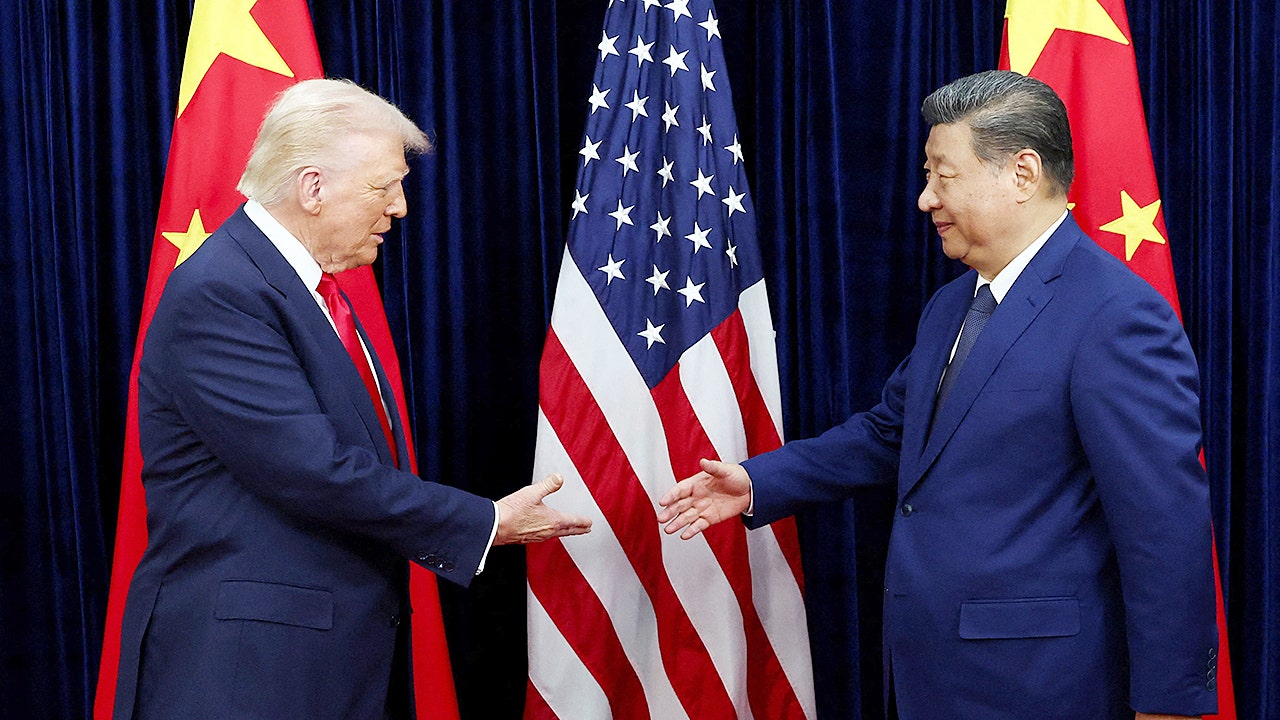
In a monologue that instantly erupted online, the Late Show host transformed what was supposed to be a carefully managed display of geopolitical strength into one of the most awkward and relentlessly mocked moments of the 2026 political cycle. Clips from the segment spread rapidly across TikTok, YouTube, and X after Colbert compared Trump’s unusually long handshake with Chinese President Xi Jinping to “two alpha dads fighting over the last steak at a barbecue.”
The audience roared.
But beneath the jokes was something sharper. Rather than focusing purely on policy or trade agreements, Colbert framed the visit as a performance — one built around spectacle, masculine posturing, and carefully staged symbolism. At one point, he mocked the president’s repeated insistence that he “only says the truth,” sarcastically joking that fact-checkers may have finally crossed “the billion-lie milestone.”
That line immediately detonated online.
For many viewers, the monologue felt less like traditional late-night comedy and more like an emotional reaction to the exhausting theater surrounding modern politics. Colbert bounced rapidly between topics — the China trip, the Iran conflict, rising inflation fears, bizarre tech innovations, and even Japanese snack packaging shortages — stitching them together into what critics described as a portrait of a world slowly drifting into absurdity.
One of the strangest but most talked-about moments involved Japanese snack giant Calbee, which recently drew attention after reports claimed rising material costs linked to global instability were forcing some products to shift toward simpler black-and-white packaging designs to reduce ink expenses. Colbert treated the story like the symbolic breaking point of the modern economy.
“We’ve reached the stage of history where even potato chips are entering their grayscale era,” he joked.
The crowd exploded again.
He then pivoted toward a Fox News segment featuring robotic household technology and an AI-powered sausage-serving machine, mocking what he described as the terrifying realization that “the robots aren’t coming — they’re already making breakfast.”
But the centerpiece of the monologue remained Trump’s meeting with Xi.
Colbert repeatedly returned to the now-viral handshake footage, framing it as the perfect metaphor for the current state of global politics: two world leaders locked in an extended display of dominance while ordinary citizens struggle with inflation, war anxiety, and economic uncertainty back home.

At one point, the comedian referenced the famous geopolitical theory known as the “Thucydides Trap,” which describes the danger of conflict between rising and established world powers. Then, in classic Colbert fashion, he joked that Trump probably believed it sounded “less like a historical theory and more like a prescription cream advertised during golf tournaments.”
The line quickly became one of the night’s most shared clips.
The monologue also took aim at recent leadership decisions surrounding the FDA, mocking the appointment of attorney Kyle Diamantas to a prominent role while joking about America’s growing tendency to place political loyalty above expertise. Combined with references to vaping crackdowns, AI fears, and economic instability, the entire segment felt intentionally overwhelming — as though Colbert was trying to mirror the nonstop chaos of the modern news cycle itself.
That may explain why the reaction online became so intense.

Supporters praised the host for saying what many frustrated viewers were already feeling. Critics accused him of turning geopolitical tensions into partisan entertainment. But regardless of where audiences stood politically, almost everyone agreed on one thing: the segment captured the surreal mood hanging over 2026 better than most traditional news broadcasts.
And that increasingly appears to be the role late-night television now plays in American culture.
In earlier eras, comedians reacted to politics after the headlines broke. Today, shows like The Late Show often shape how millions emotionally process those headlines in real time. The laughter is still there — but underneath it sits something heavier: exhaustion, disbelief, and the growing sense that the line between global leadership and performance art may have disappeared completely.
By the end of the night, viewers were no longer debating trade policy or diplomatic strategy.
They were replaying the handshake over and over again, trying to decide whether they had just witnessed international diplomacy… or the strangest power contest late-night television has ever turned into comedy.
