After more than a decade behind one of the most famous desks in television, Stephen Colbert had interviewed almost everyone modern culture could offer.
For eleven seasons on The Late Show with Stephen Colbert, audiences watched him dominate late-night television with sharp political satire, emotional interviews, and a rare ability to move seamlessly between comedy and sincerity.
The man capable of dismantling political hypocrisy with a single raised eyebrow and perfectly timed joke.
So when Colbert sat down during one of his final interviews and quietly admitted that his dream guest had never been a president, never been a Hollywood superstar, and never even been his longtime friend Jon Stewart…
And suddenly, audiences began seeing Stephen Colbert differently.
Because beneath the sharp comedy and political monologues existed something many viewers only partially understood:
A man shaped as deeply by grief and faith as by humor.
The Public Version Of Stephen Colbert
For years, television audiences associated Colbert primarily with satire.
He first became a cultural force through The Colbert Report, where he brilliantly played an exaggerated parody of political media personalities. The character was loud, arrogant, absurdly confident, and hilariously committed to his own contradictions.
The performance became legendary because it exposed the mechanics of modern political media through comedy sharper than most journalism.
Later, when he inherited The Late Show, many wondered whether audiences would accept the “real” Stephen Colbert after years of watching a fictionalized persona.
They did.
Because underneath the satire existed extraordinary emotional intelligence.
Colbert could roast politicians mercilessly one moment and discuss grief, spirituality, family, or human suffering with remarkable tenderness the next.
That emotional range separated him from many late-night hosts.
He was funny.
But he was also thoughtful.
And often unexpectedly vulnerable.
The Tragedy That Changed His Life Forever
To understand why the Pope mattered so much to Stephen Colbert, it helps to understand the tragedy that shaped him long before television fame arrived.
In 1974, when Colbert was only ten years old, his father and two brothers were killed in a plane crash.
The loss devastated the family completely.
One ordinary day became the dividing line between childhood innocence and lifelong grief.
Colbert has spoken openly over the years about the emotional impact of that tragedy. Losing so much so young forced him into questions many adults struggle to confront even late in life:
Why does suffering exist?
How do people continue after devastating loss?
Can faith survive tragedy?
For many people, grief destroys spiritual belief entirely.
For Colbert, it complicated faith but ultimately deepened it.
That distinction matters enormously.
Because his comedy was never merely entertainment.
It became survival.
Comedy As Emotional Rescue
People often misunderstand comedians.
Audiences assume funny people must naturally live lightly or effortlessly. But many great comedians build humor in direct response to pain, anxiety, loneliness, or grief.
Stephen Colbert belongs deeply to that tradition.
Humor became a way of processing darkness without surrendering to it.
:max_bytes(150000):strip_icc()/Stephen-Colbert-112723-e90e03887b6d4fd0857b677b986fd3df.jpg)
A way of maintaining emotional movement after tragedy threatened to freeze life permanently.
And perhaps that explains why his comedy often carried unusual humanity beneath the satire.
Even while criticizing political figures, Colbert rarely sounded emotionally empty. Anger existed, certainly. Frustration existed. But so did compassion.
Because people who survive profound grief often recognize vulnerability everywhere afterward.
The Faith Many People Forget About
Modern media discussions about Stephen Colbert usually focus on politics or comedy.
But faith has always remained central to his identity.
He has openly discussed his Catholicism for years.
He teaches Sunday school.
He speaks about spirituality comfortably and seriously even within entertainment settings where public religious discussion often feels awkward or performative.
Yet Colbert never presented faith as moral superiority.
Instead, he spoke about it almost like conversation.
Something living.
Complicated.
Still evolving.
That emotional honesty made audiences trust him more deeply.
Because many public figures discuss religion as branding or ideology.
Colbert discussed it like a person still wrestling honestly with existence itself.
Why The Pope Became His “White Whale”
When Colbert described the Pope as his “white whale,” the phrase carried literary weight intentionally.
The expression comes from Moby-Dick, where Captain Ahab becomes consumed by the impossible pursuit of the great white whale.
But Colbert’s version felt less obsessive than symbolic.
The Pope represented something larger than celebrity access.
He represented the intersection of the two forces shaping Colbert’s entire life:
Faith and public communication.
Imagine the emotional significance of that conversation for someone like him.
Not because the Pope is famous.
But because Colbert likely viewed him as someone carrying enormous spiritual and moral responsibility in an increasingly fractured world.
And perhaps, privately, Colbert still carried questions he wanted to ask.
Not as a host.
As a human being.
The Man Behind The Desk
Late-night television often requires emotional armor.
Hosts must appear sharp, confident, endlessly prepared. Every pause risks losing audience energy. Every interview must entertain while navigating celebrity egos, network expectations, and public scrutiny.
Over time, viewers can forget the host himself exists beneath the performance.
But Colbert occasionally allowed glimpses behind the curtain.
Moments where grief, faith, or vulnerability emerged unexpectedly.
Those moments frequently became more powerful than the jokes themselves.
Because audiences sensed authenticity immediately.
And authenticity matters especially in an era saturated with polished personas.
Nine Years At Number One
By the time Colbert reflected publicly on his dream guest, he had already achieved enormous professional success.
Nine years as late-night’s top-rated host.
Thousands of interviews.
Political influence extending far beyond entertainment.
Cultural relevance rare for any television personality in a fragmented media age.
Yet despite all that achievement, one conversation still remained unfinished in his mind.
The Pope.
There is something deeply human about that.
Success rarely erases longing completely.
Even people who accomplish extraordinary things often carry one unanswered question or one unrealized conversation quietly inside themselves.
For Colbert, that unfinished possibility carried emotional gravity.
What Would He Have Asked?
That question fascinated audiences immediately after his comments spread online.
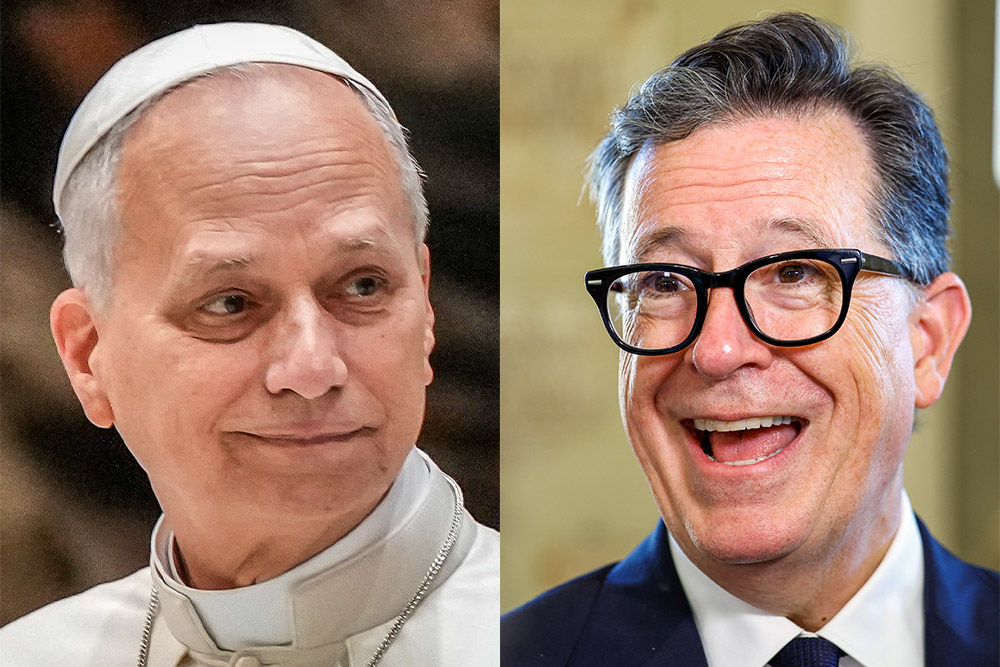
What would Stephen Colbert actually ask the Pope if given the opportunity?
Would it become political?
Theological?
Philosophical?
Or deeply personal?
Perhaps all of them.
But those who know Colbert’s interviews understand something important:
His best conversations rarely focused on surface-level fame.
He was interested in meaning.
Fear.
Purpose.
Suffering.
Hope.
He often asked questions that sounded less like journalism and more like genuine curiosity.
So perhaps the conversation with the Pope would not begin with politics at all.
Perhaps it would begin with grief.
The Question Hidden Beneath The Question
There is a possibility that Colbert’s fascination with interviewing the Pope had less to do with religion institutionally and more to do with emotional survival spiritually.
After losing his father and brothers so young, he spent decades navigating public life while privately carrying childhood grief into adulthood.
Comedy helped.
Faith helped.
Family helped.
But grief never disappears completely.
It changes shape.
Perhaps somewhere inside himself, Colbert still wanted to ask someone representing spiritual leadership how humans continue carrying sorrow without becoming consumed by it.
Not theoretically.
Actually.
That possibility transforms the imagined interview entirely.
It stops being celebrity television.
And becomes two people discussing what it means to remain hopeful in a painful world.
Why Audiences Connected So Deeply To The Revelation
People responded emotionally to Colbert’s comments because the confession felt unexpectedly sincere.
In modern celebrity culture, dream interviews are usually framed through prestige:
The biggest actor.
The most powerful politician.
The impossible booking.
But Colbert’s answer revealed something deeper about his priorities.
He was not chasing status.
He was chasing meaning.
And meaning resonates emotionally because so many people feel starved for it publicly.
The Final Season Feeling
As Colbert approaches his final show airing May 21, audiences are naturally becoming nostalgic.
Late-night hosts eventually evolve beyond entertainers into emotional fixtures in viewers’ routines. People watch them through elections, pandemics, personal heartbreaks, career changes, and ordinary evenings after exhausting days.
Over time, the host becomes strangely familiar.
Part comedian.
Part companion.
Part emotional translator for chaotic national moments.
Stephen Colbert occupied that role uniquely because he balanced intellect with vulnerability so effectively.
Now, as his run ends, audiences are reflecting not only on the jokes but on the emotional consistency he provided for years.
Walking Away Without The Interview
There is poetic sadness in the fact that Colbert never landed the one interview he wanted most.
After speaking with presidents and global celebrities, the conversation he desired remained unreachable.
Yet perhaps that unfinished longing gives the story emotional beauty too.
Some questions remain unanswered.
Some conversations never happen.
Human life is full of incompletions.
And maybe Colbert understands that better than most.
The Humanity Beneath Late-Night Television
People sometimes dismiss late-night television as disposable entertainment.
Monologues.
Celebrity promotion.
Political jokes.
But hosts like Stephen Colbert occasionally transformed the format into something emotionally meaningful.
Through interviews, humor, and moments of vulnerability, he created space for audiences to process fear, grief, absurdity, and uncertainty together.
That achievement matters culturally more than ratings alone can measure.
Especially during divisive or painful periods in public life.
What The Pope Might Have Seen In Colbert
It is interesting to imagine the conversation from the opposite perspective too.
What might the Pope have seen in Stephen Colbert?
Not simply a comedian.
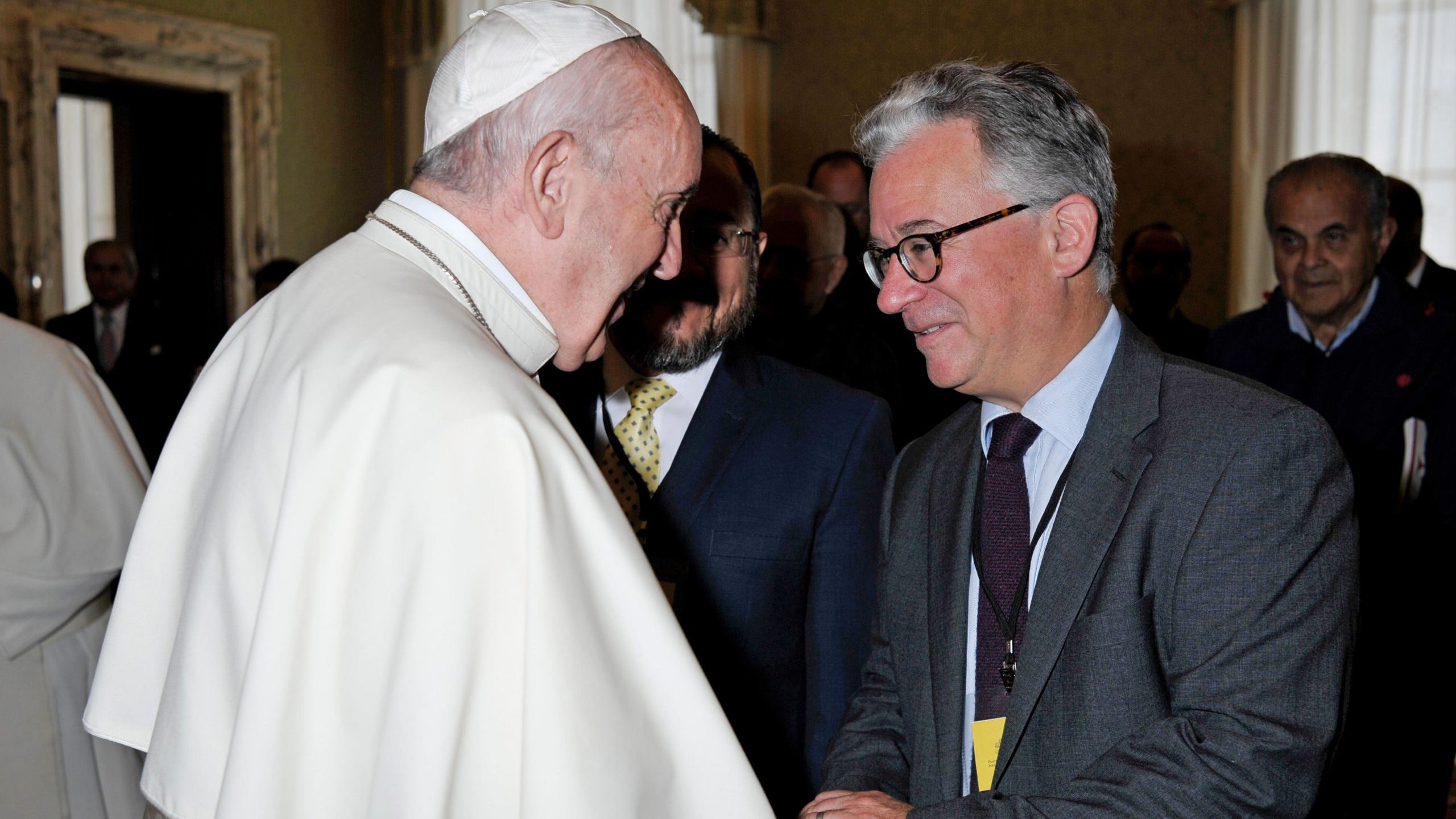
But a man who used humor to keep despair from winning.
A public figure who spoke openly about suffering without surrendering entirely to cynicism.
Someone who remained spiritually curious despite tragedy.
Those qualities carry profound humanity.
More Than A Missed Interview
Ultimately, Colbert’s “white whale” confession resonated because it revealed the emotional truth behind his career.
Comedy was never merely performance.
It was resilience.
Faith was never merely ritual.
It was survival.
And the dream interview was never merely about celebrity access.
It was about conversation.
Connection.
Understanding.
Perhaps even healing.
The Question He May Never Stop Asking
As his final episode approaches, audiences naturally wonder what Stephen Colbert feels privately stepping away from the desk that defined so much of modern late-night television.
Relief?
Exhaustion?
Freedom?
Probably all three.
But perhaps somewhere beneath those emotions remains one quiet, lingering thought:
What would that conversation with the Pope have sounded like?
Would they have discussed faith?
Loss?
Human suffering?
The responsibility of hope?
Maybe all of it.
Or maybe the first thing Colbert would have said was far simpler than anyone expects.
Maybe after decades of jokes, interviews, and public performance, he would simply have wanted to ask one deeply human question:
How do people continue loving the world after it breaks their hearts?
A Legacy Larger Than Comedy
Whether or not the interview ever happened almost matters less now than what the confession revealed.
Stephen Colbert’s legacy was never only political satire or television success.
It was emotional honesty disguised cleverly as entertainment.
The willingness to admit grief publicly.
The courage to discuss faith sincerely.
The understanding that humor can coexist beside sorrow instead of erasing it.
That emotional complexity made him different.
And perhaps that is why the Pope—not a president or celebrity—became the guest he wanted most.
Because behind the jokes sat a man still searching, still wondering, still trying to understand suffering and grace at the same time.
Just like everyone else

