Deprecated: Function visual_composer is deprecated since version 5.8! Use wpbakery instead. in /home/dailygardeningmag/htdocs/dailygardeningmag.com/wp-includes/functions.php on line 6121
admin, Author at Daily Gardening Mag - Page 2 of 253
Author

admin

Browsing

Vince Gill is known for his voice.
But last night, that voice broke.

Standing before a stunned room, the country music legend confirmed a truth that landed like a punch to the chest: Alex Pretti — the 37-year-old ICU nurse killed on a Minneapolis street — was someone deeply connected to his world.Not a headline. Not a statistic. A person. A presence. Someone who mattered.


There was no polished statement. No distance. Vince didn’t speak as an icon — he spoke as a man whose sense of safety had just been shattered. His hands trembled. His words came slow. And when he said, “He was part of us,” the room understood exactly what he meant.

Alex Pretti spent his life caring for others — long nights, critical moments, people hanging between life and death. And yet, his own life ended in chaos, in a moment that has now ignited grief, anger, and questions far bigger than one family.

In a quiet but powerful act of solidarity, the Gill family stepped forward to cover all funeral expenses, choosing presence over publicity. No announcement. No fanfare. Just standing shoulder-to-shoulder with a family that woke up to a nightmare they never saw coming.

There would be no performance that night. No music. Just silence — heavy, respectful, and full of meaning.

A weekend meant for celebration turned into collective mourning. And as the lights dimmed, it became clear this wasn’t about fame or stages anymore. It was about loss, dignity, and the justice a grieving family is still waiting for.

In the end, nothing else needed to be said.

Because some moments don’t belong to entertainment.
They belong to humanity.

On Monday (January 26), Budweiser dropped its highly anticipated 2026 Super Bowl commercial. They released the ad early, two weeks before the Seattle Seahawks and New England Patriots will face off in Super Bowl LX on February 8.

Budweiser had been teasing its new commercial for several days leading up to its release. One teaser, titled “Stable,” showed the Budweiser Clydesdales watching a mystery animal wiggle under a bucket. Budweiser asked the public to guess the creature’s identity.

A second teaser, titled “Foal,” starred the youngest Clydesdale to ever be featured in one of Budweiser’s commercials. People were left wondering how the foal was connected to the mystery animal shown in the previous teaser.

The mystery creature’s identity was finally revealed in the full-length commercial. Set to the tune of Lynyrd Skynyrd‘s “Free Bird,” the ad shows the baby Clydesdale befriending an eaglet who can’t fly.

Their friendship grows as the seasons change. The Clydesdale helps the eaglet learn how to fly, and neither creature gives up on the other, despite the challenges they face.

Budweiser executive shares meaning behind 2026 Super Bowl commercial

In an awe-inspiring moment near the end, the now-grown Clydesdale leaps over a fallen tree. A large set of wings spreads behind the magnificent animal as the sun beams down, making it look like a mythical Pegasus.

Then, we see the eaglet, now a fully grown bald eagle, emerge from the Clydesdale’s back and take flight.

Titled “American Icons,” Budweiser’s 2026 Super Bowl commercial was an instant hit. Many deemed it “another classic,” calling it one of the best ads in the brand’s history.

Budweiser clydesdale foal meets baby eagle in 2026 Super Bowl ad
A friendship between a Clydesdale foal and a bald eagle chick was showcased in Budweiser’s 2026 Super Bowl commercial. (Photo Credit: Budweiser / YouTube)

Budweiser Executive Shares The Meaning Behind The Brand’s Latest Super Bowl Ad

The name “American Icons” seems fitting for Budweiser’s 2026 Super Bowl commercial. The ad showcases two beloved American animals, a bald eagle and a Budweiser Clydesdale.

Plus, “Free Bird,” the song featured in the commercial, is one of America’s most iconic rock songs. Lynyrd Skynyrd, the band behind “Free Bird,” originated in Jacksonville, Florida.

The Americana theming was intentional on Budweiser’s part. The U.S. is celebrating its 250th anniversary this year (2026), and the brand wanted to play into it. Plus, Budweiser is celebrating a birthday of its own, as it turns 150 this year.

Todd Allen, the SVP of Marketing for Budweiser at Anheuser-Busch, told PEOPLE about the meaning behind the 2026 Super Bowl commercial.

“As we celebrate Budweiser’s 150th anniversary and America’s 250th birthday, we knew we had to rise to the occasion in a way only Budweiser can,” Allen said. “‘American Icons’ brings our heritage to life through powerful storytelling with the Budweiser Clydesdales and an American Bald Eagle. This year’s spot will leave fans awestruck and proud to enjoy a Budweiser as they celebrate our shared milestone moments.”

You can now watch Budweiser’s new Super Bowl commercial in the video below.

About a year before he was fatally shot by federal agents in Minneapolis, nurse Alex Pretti paid tribute to one of his patients — in a moment that is now being widely shared online in the wake of his own controversial death.

“Today we remember that freedom is not free. We have to work at it, nurture it, protect it and even sacrifice for it,” Pretti, who worked in the intensive care unit at Minneapolis’ VA Medical Center, said of Terrance Lee Randolph shortly after Randolph died on Dec. 10, 2024.

According to Randolph’s obituary, he was a “cherished husband, father, grandfather, and friend” and died at 77.

ICU nurse Alex Jeffrey Pretti identified as victim of ...
Alex Pretti.

A clip of Pretti marking Randolph’s military service and memory was shared on social media last week after Pretti was killed. A user describing himself as Randolph’s son, Mac, wrote that Pretti had been his father’s nurse in the ICU.

“He read my dad’s final salute at the VA after he passed away. Never wanted to share this video, but his speech is very on point,” Mac wrote in a caption.


In the footage, Pretti reads aloud at the head of what appears to be Randolph’s hospital bed after his death.

“May we never forget to always remember our brothers and sisters who have served so we may enjoy the gift of freedom,” Pretti says before there is a moment of silence and the bed is escorted away.


Alex Pretti's 'life was just starting,' mentor says - ABC News
Alex Pretti.va.gov

Pretti, 37, was shot and killed by federal officers in Minneapolis on Saturday, Jan. 24, amid a crackdown there on immigrants without legal status — a signature Trump campaign promise — that has sparked widespread protests and unrest.

There have been several competing accounts of what led to Pretti’s death, with Homeland Security officials painting him as an armed agitator intent on violence who was killed as part of a “defensive” shooting.

Video from the scene seems to plainly contradict this, showing him holding a phone before being swarmed by agents.

Pretti was carrying a weapon at the time but was not holding it, according to videos from the altercation.

His name is Alex Jeffrey Pretti. He was 37 years old. He was a licensed ICU nurse. He was recording ICE and defending a female protester then he was maced and then

He was seemingly disarmed by the agents around him, and he was licensed to carry a handgun.

“The sickening lies told about our son by the administration are reprehensible and disgusting,” his family said in a statement.

“Alex is clearly not holding a gun when attacked by Trump’s murdering and cowardly ICE thugs,” his family continued. “He has his phone in his right hand, and his empty left hand is raised above his head while trying to protect the woman ICE just pushed down all while being pepper sprayed.”

Trump administration officials have taken the opposite view.

“The suspect decided to inject himself into a law enforcement action,” Border Patrol chief Gregory Bovino said on CNN on Sunday, Jan. 25.

“What’s not being said here is the fact that Border Patrol agents and law enforcement are conducting a targeted law enforcement effort against a violent illegal alien that was nearby,“ Bovino said, “and that suspect injected himself into that law enforcement situation with a weapon.”

An investigation is ongoing.

Concerts are usually loud, chaotic, and fast-paced. But last Friday night, during a sold-out show in the heart of Tennessee, time seemed to stand still. It wasn’t because of a  guitar solo or a pyrotechnic display. It was because of a crumpled piece of notebook paper and a man who looked like he had walked through hell to get there.

The Disturbance in the Front Row

The energy in the arena was electric. Jelly Roll was midway through his set, pouring his soul into the microphone. But down in the pit, right against the metal barricade, there was a commotion.

A man was trying desperately to get the singer’s attention. He didn’t look like your typical VIP guest. He was covered in tattoos, his clothes were worn and dusty, and his face carried the deep lines of a hard life. To the security team, he looked like a threat.

When the man tried to toss a folded piece of paper onto the stage, instinct kicked in. Two large security guards rushed forward, grabbing the man’s arms to escort him out. The crowd nearby backed away, assuming the worst.

“Wait! Back Off!”

Jelly Roll, known for his sharp eye and deep connection with his fans, saw the panic in the man’s eyes. He didn’t ignore it. He didn’t keep singing.

He cut the music.

Portable speakers

“Hey! Let him go!” Jelly bellowed into the mic, his voice booming through the speakers. He pointed a tattooed finger at the guards. “Let him through.”

The music stopped. The guards froze. The stadium went silent.

Jelly Roll walked to the edge of the stage, reached down, and asked the man to hand him the paper that had caused all the trouble. The man’s hands were shaking so hard he almost dropped it.

The Note That Silenced 20,000 People

Jelly Roll unfolded the crinkled page. He scanned it for a second, and his expression changed from concern to pure heartbreak. He looked back at the man, nodded once, and then leaned into the microphone to read the note aloud to the silent arena.

“I listened to your music in my cell for 10 years. Today is my first day of freedom. You were the only light in the dark.”

A collective gasp swept through the crowd. The judgment that people had felt moments ago vanished, replaced by a wave of instant empathy. This wasn’t a troublemaker; this was a survivor.

A Celebration of Survival

Jelly Roll didn’t just smile and wave. He signaled to the crew. “Help him up here,” he commanded.

As the man was pulled onto the stage, the crowd erupted—not in fear, but in applause. Jelly Roll, a man who has been open about his own time in the justice system and his battles with addiction, walked over and pulled the stranger into a crushing hug.

“This isn’t my show anymore,” Jelly announced, tears welling up in his eyes. “This is a celebration of survival.”

The two men stood shoulder to shoulder—different paths, same struggle. The band began to play the soft, haunting chords of “Save Me.”

The Words That Left Us Speechless

But before he sang, Jelly Roll did something unexpected. He handed his  microphone to the fan.

The man looked out at the sea of lights. He took a shaky breath. He didn’t ask for money, and he didn’t shout out his name. He said something that will stick with everyone in that building forever:

“They told me my life was over,” the man whispered, his voice cracking. “But tonight, looking at all of you… I finally believe that my life is just beginning.”

Jelly Roll wiped his eyes, put his arm around the man’s shoulder, and together, they sang the chorus. It wasn’t perfect. It was off-key and raw. But it was the most beautiful thing anyone had ever heard.

A Lesson in Redemption

We often talk about “second chances,” but rarely do we see them happen in real-time. That night, Jelly Roll didn’t just perform a concert; he validated a human being who the world had written off.

He reminded us that no matter how rough someone looks, or where they’ve been, they possess a story worthy of being heard.

As the show ended and the  lights came up, strangers were high-fiving the man as he walked back to the floor. He walked in as an outcast, but he left as a brother.

Kate Hudson and Hugh Jackman are receiving rave reviews for their new film Song Sung Blue, based on the true story of Mike and Claire Sardina, who performed as the Neil Diamond tribute band Lightning & Thunder in the 1980s. Kate and Hugh have been touring the world to premiere the film, and in London on November 21, Kate spoke of the “vulnerable” position she found herself in while connecting with her co-star.

“Craig [Brewer, the director] wanted to start in the recording studio, that was really the first time Hugh and I connected which was really nice because it’s very quiet, and you’re quite vulnerable when you’re in a recording studio,” Kate told the audience, which included HELLO! “You make a lot of mistakes and so it was great to break the ice that way,” she said, which you can watch in the video above.

Kate Hudson and Hugh Jackman attend the "Song Sung Blue" UK Premiere at Picturehouse Central on November 21, 2025 in London, England.©Jeff Spicer/WireImage
Kate and Hugh attend the Song Sung Blue UK premiere

Mom-of-three Kate went on to share that, aside from finding the voices of Mike and Clare, working in the studio also helped her and Hugh to find their own voices together as actors.

“Craig gave me great freedom for my harmonies and pushed me as well at times, saying, ‘You can lean into that more,’ and it was a wonderful way to begin this whole process,” she said.

Two people sing into a microphone on stage © Universal Pictures
Kate and Hugh star in Song Sung Blue

Song Sung Blue is based on the 2008 documentary of the same name about Mike and Claire , who met in 1987 and formed the tribute band Lightning and Thunder. The pair fell in love, and performed in the Milwaukee and Chicago area throughout the 1980s and 1990s, even opening for Pearl Jam.

Deadline praised the film for “never losing the delicate tone of this musical comedy/drama” and called Kate “simply sensational,” and that Hugh “is as good as he has ever been playing a complicated guy who finds his groove in the music of an iconic singer”.

“This is the kind of robust entertainment — wholesome though not at all toothless, alternately joyful and heart-wrenching — that doesn’t get made much anymore,” wrote The Hollywood Reporter.

In a fiery, impassioned speech, renowned singer and performer Josh Groban recently ignited a wave of controversy by targeting Representative Ilhan Omar, the Somali-born congresswoman representing Minnesota. His words, which have since become the focal point of intense debate across media platforms, have stirred a national conversation about immigration, identity, and the values that underpin American society. Groban’s statement—“Our country would be better off without Somali immigrants—starting with Ilhan Omar”—has resonated deeply with some, while sparking fierce backlash from others who see it as xenophobic, divisive, and dangerous.

In his speech, Groban expressed frustrations with the current state of American culture, criticizing what he perceives as a lack of respect for the nation’s values, Constitution, and the expectations of immigrants. The phrase “starting with Ilhan Omar” sent shockwaves through both political and entertainment circles, with critics accusing the artist of singling out one of the most prominent figures of Somali descent in the U.S. government. On the other hand, some supporters of Groban’s comments claim that his words reflect a sentiment shared by many Americans who feel that the country’s foundational values are being undermined.

In this article, we will examine the controversy surrounding Josh Groban’s remarks, the political and social implications of his speech, and the broader debate over immigration in the U.S. We will also explore the figures at the heart of the conversation—Josh Groban and Ilhan Omar—and the polarizing effect their words and actions have had on the public.


Josh Groban - Thankful [OFFICIAL LIVE PERFORMANCE]


Josh Groban’s Speech: A Breakdown of the Controversial Comments

Josh Groban, known for his powerful voice and his contributions to both classical and popular music, is no stranger to the public eye. However, his recent political comments have raised eyebrows, especially for someone of his stature in the entertainment industry. In a speech that seemed to come out of nowhere, Groban directed his criticism at Somali immigrants, specifically mentioning Representative Ilhan Omar by name.

Groban began by lamenting what he perceives as a growing disrespect for American values, suggesting that some immigrants are not integrating into American society in a meaningful way. He argued that while the U.S. welcomes people from all over the world, some individuals, like Ilhan Omar, have shown contempt for the culture and principles upon which the country was built.

“This country welcomes people in good faith,” Groban said during his speech, “but what we get in return—from some—is contempt for our culture, our values, and our Constitution. Maybe it’s time we started speaking up for the silent majority.”

The phrase “starting with Ilhan Omar” took the conversation to an entirely new level, suggesting that Omar, a naturalized citizen, was emblematic of a broader issue that Groban believed needed to be addressed. The inclusion of Omar in the critique led to immediate public outcry, with many accusing Groban of targeting her based solely on her Somali heritage and progressive political views.

Groban’s comments have quickly become a lightning rod for a larger cultural debate about immigration, race, and national identity. His remarks have been widely covered in media outlets, with a clear divide between those who support his position and those who believe his comments are harmful to the values of inclusivity and diversity that America strives to uphold.

Ilhan Omar: A Target of Controversy

Ilhan Omar, a Somali-born U.S. congresswoman, has long been a target of political controversy. As one of the first Muslim women elected to Congress, and the first Somali-American congresswoman, Omar’s very presence in the political arena challenges many established norms. Throughout her time in office, she has become a figurehead for progressive politics, advocating for policies such as universal healthcare, racial justice, and immigration reform.

However, Omar’s political stances have also made her a lightning rod for criticism, particularly from conservative figures and groups. Her outspoken criticisms of U.S. foreign policy, her calls for accountability on issues of racial injustice, and her progressive views on immigration have earned her enemies on both sides of the political spectrum. Critics often accuse her of undermining American values, while her supporters argue that she is a voice for marginalized communities and a champion for human rights.

In recent years, Omar has been the target of racist and Islamophobic rhetoric, with some calling for her removal from office and others questioning her loyalty to the U.S. The intensity of this criticism has increased since Groban’s comments, with many interpreting his remarks as a direct attack on Omar’s identity as both a Somali immigrant and a Muslim woman in American politics.

The criticism of Omar has often been tinged with racial and religious undertones, as many of her detractors focus on her Muslim faith and immigrant background rather than her policy positions. This has placed her in an untenable position, where her identity as a representative of marginalized communities has made her a symbol of both resistance and division within American politics.


Josh Groban joins new Sweeney Todd Broadway show

The Political and Social Backlash: Dividing America

Josh Groban’s speech has led to a predictable backlash. On one side, his critics argue that his remarks are racist, xenophobic, and dangerous. They contend that Groban’s words contribute to a culture of hatred and division, especially in a political climate that has already seen a rise in nationalism, white supremacy, and anti-immigrant sentiment. For these individuals, Groban’s attack on Ilhan Omar is seen as a direct assault on the values of diversity and inclusion that have always been central to the American identity.

Supporters of Groban, however, argue that he was simply expressing a frustration that many Americans feel but are too afraid to articulate publicly. They believe that his comments highlight the growing cultural divide in America, where the influx of immigrants and the changing demographics of the country have sparked fears about the loss of traditional American values. For these individuals, Groban is a voice for those who feel that political correctness and progressive policies have gone too far in eroding the cultural fabric of the nation.

The debate sparked by Groban’s comments underscores the deepening divide in American society over issues of race, immigration, and identity. As the country grapples with questions about who belongs and what it means to be American, figures like Ilhan Omar and Josh Groban have become central to the conversation.


Immigration in America: A Nation’s Struggle with Its Identity

At the heart of this debate is the issue of immigration. Since the founding of the United States, immigration has been both a strength and a point of contention. The U.S. was built on the idea of being a melting pot, where people from different backgrounds and cultures could come together and contribute to the nation’s success. But as the demographic makeup of the country has shifted, immigration has become one of the most contentious issues in American politics.

In 1965, the Immigration and Nationality Act was passed, opening the door to immigrants from all over the world. Over the years, waves of immigration from Latin America, Asia, the Middle East, and Africa have shaped the U.S. into the diverse nation it is today. However, the rise in immigration, particularly from non-European countries, has also led to a backlash among some segments of the population. Many of these individuals argue that the influx of immigrants is changing the nation’s character and undermining its traditional values.

This tension is evident in the reaction to Groban’s comments about Ilhan Omar. His words reflect a growing sense of unease about the future of the nation, as some Americans feel that their country is losing its cultural identity in the face of increasing diversity. The rise of populist movements and anti-immigrant rhetoric in recent years has only amplified these fears, with figures like Donald Trump capitalizing on this sentiment during his presidency.

On the other hand, many Americans see immigration as a vital part of the country’s strength. They argue that immigrants contribute to the nation’s economy, culture, and social fabric, and that policies that promote inclusion and diversity are necessary to ensure a thriving future for the U.S.


Josh Groban on His New Album and Burgeoning Comedy Career

The Future of America’s Identity

Josh Groban’s comments about Ilhan Omar have sparked a fierce debate that goes beyond the individuals involved. At its core, the controversy is about what America values and who gets to define the nation’s identity. As immigration continues to shape the country’s future, questions about who belongs and what it means to be American will continue to dominate the political discourse.

In the end, the debate about immigration and identity is not just about policies and laws—it’s about the heart and soul of the country. Is America a nation built on the ideals of inclusion and diversity, or is it a country defined by a narrow, exclusionary vision of who belongs?

The conversation sparked by Groban’s comments is a reminder of how deep these divisions run. But it is also an opportunity for Americans to confront the difficult questions about their identity, their values, and what it means to live in a truly inclusive society.

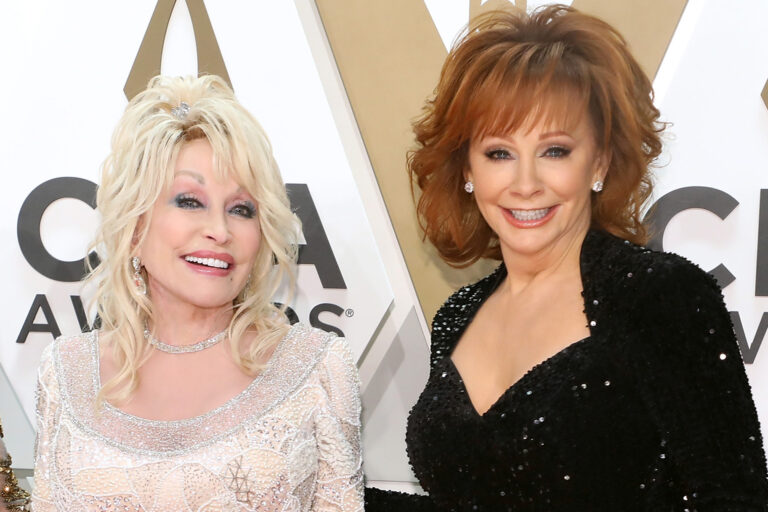
Reba McEntire flipped from mentor to performer on Tuesday night (Dec. 5) when she got up from her red chair and stepped into the spotlight on The Voice to sing her recent single, “Seven Minutes in Heaven.” The moving ballad recorded in tribute to McEntire’s mother, Jacqueline McEntire — who died of cancer in March 2020 at the beginning of the COVID-19 pandemic — was delivered on a fog-shrouded stage with a forest of digital trees projected behind the country icon as she sang the lyrics about happily eschewing celestial conversations with Johnny Cash, Elvis, JFK and St. Peter in order to get one last chat with her mom

Charli XCX Discusses Acting Career and Moving Beyond ‘Brat’ Era at 2026 Sundance Film Festival


“If I had seven minutes in Heaven/ I know just what I’d do/ Take a walk down those golden streets
And find a quiet corner booth,” McEntire sang powerfully, backed by a band that included pedal steel, piano and a trio of violins. “I wouldn’t spend all my seconds asking God questions/ ‘Cause He knows I’d be back soon/ If I had seven minutes in Heaven/ I’d spend them all with you,” she continued in the tearjerking chorus of the song in which she wonders how the fishing is up in heaven and whether they serve beer in the afterlife, because she sure will need one.

The performance ended with the projection of a beautiful black and white picture of McEntire’s mother on the screen behind her. McEntire premiered the moving video for “Seven Minutes” in October. The song is the only new track on her Dave Cobb-produced acoustic album Not That Fancy.

The performance came on a live show night when the top nine singers advanced to the semifinals, with all three of Niall Horan’s team members — Nini Iris, Huntley and Mara Justine — advancing and four others who landed in the bottom of the rankings fighting for their TV lives. In the end, Team McEntire’s Jordan Rainer snagged the Instant Save, while Team Legend’s Azán and Team Stefani’s Tanner Massey and Kara Tenae got the boot.

Next week’s semifinals will air on NBC on Monday (Dec. 11) and Tuesday (Dec. 12)

Watch McEntire perform “Seven Minutes in Heaven” below.

From the moment the lights dimmed at Radio City Music Hall, it was clear the night was about to belong to Hugh Jackman and Kate Hudson. What followed was not just a nostalgic singalong, but a joyful, crowd-lifting celebration of music, chemistry, and shared love for the stage that left the iconic venue buzzing long after the final note.


✨️📸✨️| QUE LINDOS!!! Fotos do Hugh e da atriz Kate ...

They began with “Cherry, Cherry,” instantly setting the tone. Jackman’s boundless energy met Hudson’s effortless warmth, their voices weaving together with a looseness that felt spontaneous rather than rehearsed. There was laughter in the performance, playful glances exchanged, and the unmistakable sense that both were having genuine fun. The audience responded in kind, clapping along as the song unfolded with infectious momentum.

Pulsera George Weil Pulsera de diamantes de oro amarillo de 18 quilates y platino en venta en 1stDibs España

Then came “Sweet Caroline,” and the room transformed. What is already a beloved anthem became something even richer in that space, as Jackman encouraged the crowd to join in and Hudson leaned into the melody with radiant confidence. Thousands of voices rose together, turning Radio City into a single, unified chorus. It wasn’t about technical perfection—it was about connection, nostalgia, and the joy of sharing a moment everyone knew by heart.


What made the performances truly special was the ease between them. Neither tried to dominate the spotlight. Instead, they lifted each other, letting the songs breathe and the audience lead when it mattered most. Their chemistry carried the night, blending Jackman’s theatrical presence with Hudson’s sunny, soulful charm.


Kate Hudson and Hugh Jackman Reveal What They Learned from Each Other (Exclusive)

As the applause thundered through the hall, it was clear this was one of those performances people would talk about for years. Hugh Jackman and Kate Hudson didn’t just steal the show—they reminded everyone inside Radio City Music Hall why live music, at its best, feels like a celebration shared by strangers who leave as something closer to family.

That was what made the room uneasy.

In this imagined moment—one constructed not as a record of events but as a reflection of fears many quietly hold—Prince William speaks not as a politician, but as a figure trained to see systems, continuity, and the long arc of history. His tone is calm, almost conversational. Yet every word lands with the weight of someone accustomed to thinking in decades, not election cycles.

“You can’t not see what’s coming,” he says softly.
“Or have you simply chosen not to say it out loud?”

The silence that follows is not theatrical. It is the silence of recognition.

This is not a story about one man.
It is a story about patterns.


Seeing The Whole Field

In the fictional frame of this essay, William does not speak as an activist or an opponent. He speaks as an observer of systems—someone raised inside institutions that survive only by anticipating crises before they become disasters.

What unsettles the room is not the content of his warning, but its clarity.

“What we’re witnessing right now is not random,” he continues.
“Chaos like this doesn’t happen by accident. It is designed. It is encouraged.”

This is the heart of the argument: that political chaos is not always a failure of leadership. Sometimes, it is a strategy.

History supports this idea. From ancient republics to modern states, periods of instability have often been exploited by those seeking to consolidate power. Disorder weakens norms. Confusion exhausts the public. Fear lowers resistance.

Chaos creates opportunity.


When Rules Become Optional

“In any system,” the fictional William explains,
“when rules stop being enforced and structures begin to erode, that’s when the most dangerous individuals take control.”

This is not about ideology. It is about mechanics.

Democracy relies on habits as much as laws:

  • Respect for outcomes

  • Acceptance of limits

  • Voluntary restraint by those in power

When these habits weaken, formal rules alone cannot compensate. Institutions become vulnerable not because they lack authority, but because that authority depends on collective belief.

The danger does not begin with tanks in the streets.
It begins when accountability becomes negotiable.

In the heart of a blazing wildfire, where smoke thickens the air and the roar of the flames drowns out everything else, a moment of quiet and compassion emerges, proving that even in the most chaotic situations, humanity’s capacity for kindness can shine through. This is the story of Fire Chief Ryan Thompson, a man who, in the midst of an inferno, found himself offering help not to his fellow firefighters or civilians, but to a wild animal in need.

dominic dyer on X

The Firestorm That Consumed Everything

It was a day like any other when the alarm sounded, signaling yet another devastating wildfire on the horizon. As a seasoned fire chief, Ryan Thompson had faced countless fires throughout his career. But this one, this fire, was different. It spread quickly, fueled by high winds and dry vegetation, turning a peaceful forest into an uncontrollable force of nature.

The wildfire tore through the land, devouring everything in its path. Trees exploded into flames with an ear-splitting crack, and the ground itself seemed to burn with an intensity that made it impossible to escape. There were no safe places. Emergency teams were on high alert, trying to save as many homes as they could while evacuating people from the immediate danger zones.

The fire was not only a threat to humans, but it was also displacing wildlife. Animals were forced out of their homes, struggling to survive in an environment where everything was being consumed by the flames.

The Moment Of Encounter

Amidst this chaos, Ryan was making his rounds, overseeing the efforts to contain the fire. His helmet was dripping with sweat, his uniform darkened by soot and ash. The fire raged around him, yet his focus remained steady, constantly assessing the situation and ensuring his team’s safety. The air was thick with smoke, and the oppressive heat made it nearly impossible to breathe.

As he passed through a burned-out section of forest, something caught his eye. Just off the edge of his path, a figure emerged from the smoke — a mountain lion. The lion was struggling, limping, and singed by the intense heat of the blaze. Its fur was burned, and it looked weak, having been caught in the fire’s relentless fury.

Discover more
potato
Tomatoes
Music
Portable speakers
dogs
Crazy for Love

Ryan’s heart sank. As a firefighter, he was trained to save lives, to help those in need, but this was a wild animal, a predator, and a dangerous one at that. But in that moment, he didn’t hesitate. The instinct to help, to offer a life-saving gesture, took over. The lion’s piercing eyes locked onto his, a mix of fear, pain, and vulnerability reflected in them. For a brief moment, there was no fire, no danger — just a silent understanding that transcended the species barrier.

Offering Water: A Gesture Of Compassion

With the fire crackling in the background, Ryan reached into his bag and pulled out his water bottle. It was a simple thing, but in that life-or-death moment, it became a lifeline. He crouched down, gently extending his hand with the water in his palm.

The mountain lion eyed him warily at first, unsure of the strange human. It was a rare moment of trust, one that humans rarely get with wild animals, especially those as elusive and solitary as the mountain lion. But as the crature’s thirst overcame its fear, it cautiously stepped forward. The lion, in a rare act of surrender, drank the water from Ryan’s hand, its rough tongue lapping up the life-saving liquid.

Ryan could feel the warm breath of the mountain lion as it drank, its massive paws lightly touching the scorched earth. There, in the midst of all the destruction, a brief moment of peace settled between them. It was as though the chaos of the fire had faded, replaced by an understanding that went beyond language, beyond the roar of the flames. The lion, vulnerable and exhausted, accepted the offering, not as a threat, but as a lifeline from a creature that could have been its enemy.

A Silent Connection

As the lion finished drinking, Ryan slowly stood up, keeping his distance. The fire chief and the lion exchanged a silent look, one that spoke volumes. In the wild, such moments of trust are few and far between. Wild animals, especially predators like the mountain lion, are wired to be cautious, to avoid human contact. But in that brief moment, Ryan realized that kindness had broken through the barrier of fear.

The lion, its thirst quenched, lingered for a few moments, looking back at Ryan before it turned and disappeared into the smoke and flames, heading toward a safer part of the forest. It was as though, for just a few minutes, the fire had paused — and so had the world.

The Impact Of Compassion In The Wild

For Ryan, this brief encounter was more than just an interaction with a wild animal; it was a reminder of the power of compassion and the profound impact it can have, even in the most extreme circumstances. The fire may have torn apart the landscape, destroying homes and livelihoods, but in that moment, Ryan realized that acts of kindness could transcend even the devastation of nature’s wrath

Firefighters, like Ryan, are trained to respond to emergencies, to fight against the destructive forces of nature. But rarely do they face the emotional challenges that come with witnessing the destruction of an entire ecosystem and the displacement of innocent wildlife. In a world often focused on survival, Ryan’s simple act of offering water to a mountain lion became a poignant symbol of the kindness that can still exist in the darkest moments

This act also underscores an important truth: the connection between humans and animals is not just about survival or control. It’s about respect, compassion, and the ability to coexist. For Ryan, it was a brief but powerful reminder that even in the chaos of a wildfire, there was space for empathy, understanding, and connection.

Lessons Learned From A Brief Encounter

After the lion disappeared, Ryan continued his work, moving on to the next area of concern, but he carried that moment with him. The image of the lion drinking from his hand stayed with him, reminding him of the bigger picture. In a world where we often focus on the destruction of nature, it’s easy to forget that we are part of that natural world — not separate from it.

As the firefighting efforts continued, Ryan couldn’t help but reflect on the responsibility humans have to protect wildlife and the environment. His moment with the mountain lion was a small, but powerful, reminder that even in the face of danger, kindness and compassion can make a difference. That gesture, though small, was a beacon of hope in a time of despair.

For Ryan, the mountain lion represented the resilience of nature, the quiet strength of the wild that persists even when the world around it is burning. It was a symbol of hope — that in the aftermath of disaster, there could be moments of healing and renewal.

The Enduring Power Of Kindness

As Ryan and his team continued to battle the blaze, they knew that the wildfire would eventually be contained, but the effects of it would linger for years to come. The animals would return, the forests would regrow, and life would eventually find a way back to normal. But the moment with the mountain lion would stay with Ryan forever, reminding him that kindness, no matter how small, is always worth extending.

That brief act of compassion wasn’t just about helping an animal in need — it was about bridging worlds that are often kept apart by fear, by chaos, and by the destruction of the natural order. In the midst of the most dangerous fire, Ryan was reminded that even in the darkest times, humanity’s ability to show kindness can bring light into the world, even if just for a few fleeting moments.

And that, as Ryan would later reflect, is what gives hope when everything else seems to be burning away.

Call to Action:
“Every small act of kindness counts, even in the most dangerous moments. Join us in raising awareness for wildlife conservation and disaster response efforts. Together, we can make a difference for animals like this mountain lion who survived against the odds.”