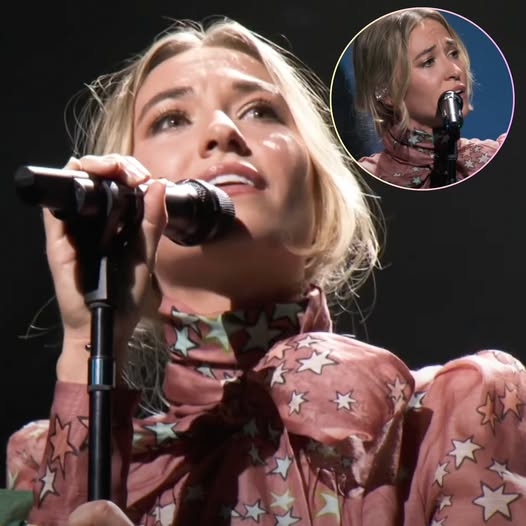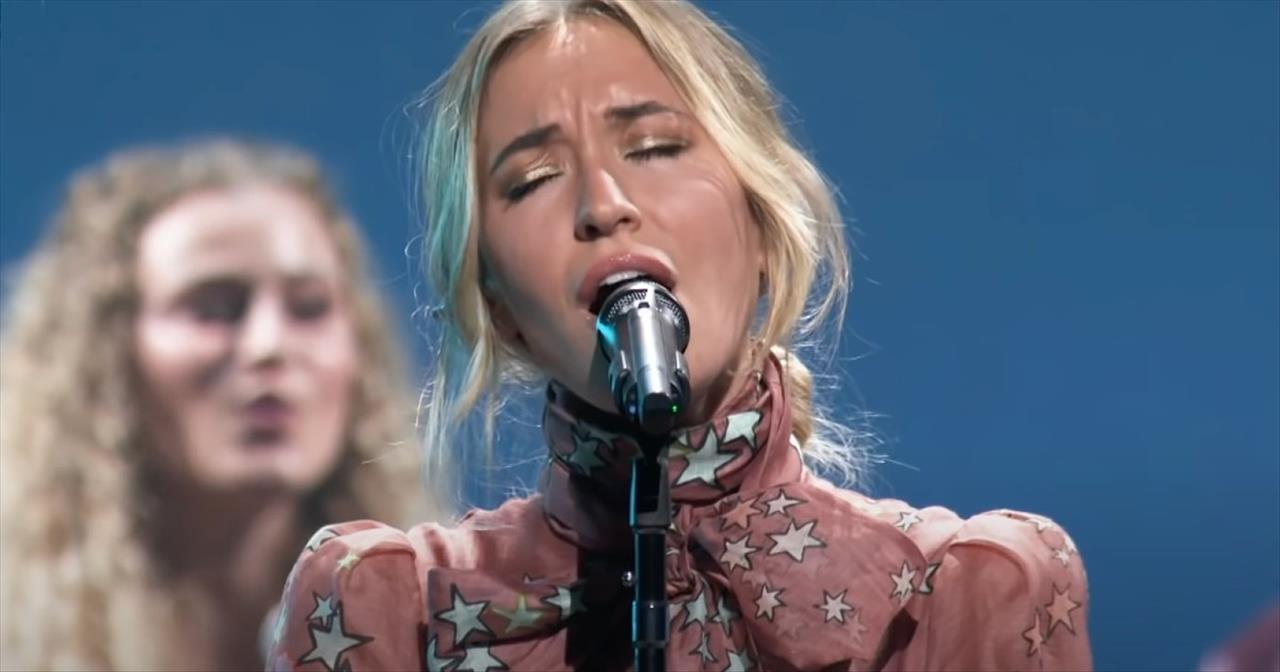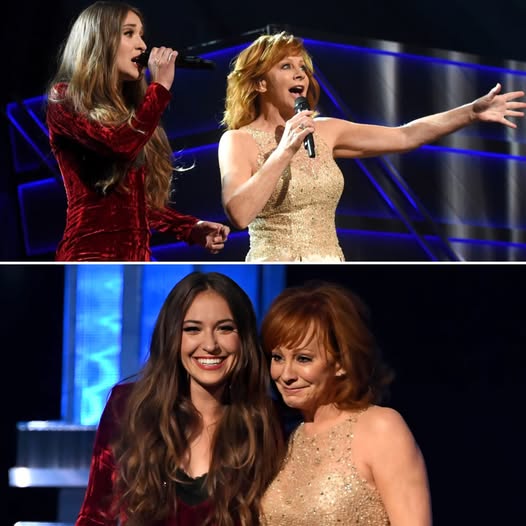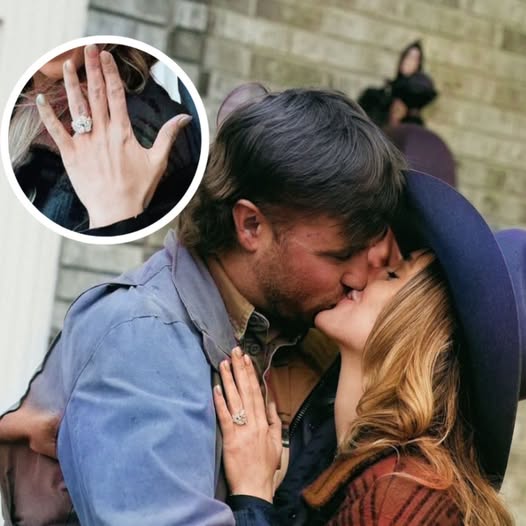
Congratulations are in order for Lainey Wilson as she revealed she is engaged to Devlin “Duck” Hodges ! The country music sensation announced her engagement in an Instagram post on Wednesday, February 12.
She captioned the post, “4x4xU forever,” with a red heart emoji.
The post featured photos of the “Heart Like a Truck” singer and her beau embracing after he gave her a stunning diamond ring while standing in front of a gorgeous house. Duck, 28, set up candles, rose petals and photos of the pair before getting down on one knee. Lainey, 32, showed off her bling in other photos snapped after the proposal. The stunning diamond sparkler is absolutely massive, and features multiple stones!
Lainey Wilson Shares Rare Look Inside Relationship With Duck Hodges
Lainey also included a video of her walking down the stairs and playfully flashing her ring at the end before laughing and running out of frame.
The comments section of the post flooded with love for the newly engaged couple! The Grand Ole Opry’s official Instagram page wrote, “Congratulations!! We have our best bell bottoms ready!”
“Omg!!!!!!!!!!! I just hollered out loud! Congratulations,” musician Tyler Rayn said.
“He gave a rock to a rolling stone, and the rolling stone let her heart free! Congrats to both!” another person wrote.
“MY BODY IS READY FOR THE LAINEY WILSON BRIDAL FASHION,” another happy person wrote.

The news came just after Lainey spoke about potentially getting engaged while chatting with Jelly Roll ‘s wife, Bunnie Xo , for CMT.
“No pressure, brother! No pressure,” Lainey said. “I might have to propose to him. We waiting!”
“No, Duck’s gonna do it. I could feel it,” Bunnie, 44, said.
“I like that,” Lainey replied.
Lainey and Duck began dating in 2021, however, they did not publicly reveal their relationship until two years later when she brought him to the 2023 Academy of Country Music Awards.
“I said, ‘We gonna see if you’re in it for the right reasons.’ Turns out, he is,” the Yellowstone actress told People in June 2023 of her romance with the former NFL player. “Somebody said how funny it was watching him high-five all of my artist friends at the ACMs, and I said, ‘Those are his friends!’”
Lainey Wilson and Boyfriend Devlin Hodges Show PDA at CMT Music Awards
In the same interview, Lainey praised Duck for being “one of my biggest cheerleaders and champions” and said they had a “healthy relationship.”
“I was never really able to write love songs, because I don’t know if I had actually felt it, but I’m writing me some love songs now,” she gushed. “I’m grateful for him.”
Last summer, Lainey opened up about her relationship with the athlete in an August 2024 interview with Zane Lowe for Apple Music.
“I finally found a guy that gives me a run for my money,” she said. “And he’s my biggest cheerleader. He’s just a good person. And he knows how important chasing down a dream is because even when he was a little boy, football was his life.”
When the pair first met, Duck was playing for the Pittsburgh Steelers. She said their relationship has been a “whirlwind” ever since, but they make it work.
“I mean, it’s not normal,” Lainey said. “We don’t get to see each other as often as some couples do, but we also know that have is very special.”