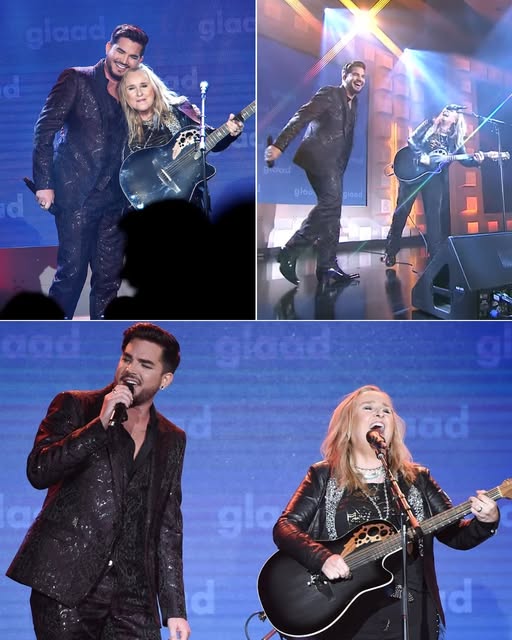
At the 2026 MusiCares Person of the Year gala honoring Mariah Carey on January 30, 2026 at the Los Angeles Convention Center, Adam Lambert performed a rendition of Mariah Carey’s 1992 ballad “Can’t Let Go.” He delivered it from a smaller B-stage in the middle of the room with piano and background vocals supporting him, showcasing his powerful and expressive vocal style.
This tribute was part of a larger set of performances by artists covering classics from Carey’s catalog in celebration of her career and philanthropy.
Adam Lambert revealed he felt unexpectedly nervous during a recent MusiCares appearance, a reminder that even seasoned performers can still grapple with pre-show jitters. The moment — shared publicly after the set — underlines the pressure artists face when high-profile benefit stages combine performance expectations with emotional stakes.
The performance took place at a MusiCares event, the charitable arm of the Recording Academy that provides support to music professionals. For Lambert, who splits his time between a solo career and high-profile collaborations, the evening carried extra weight: supporters, peers and media were all present, increasing the scrutiny on a short but visible set.
Why it matters now
Public admissions of anxiety from prominent musicians shape how audiences view live music: vulnerability can humanize stars and also steer conversations about mental health in the industry. Lambert’s candor arrives at a moment when performers and audiences alike are paying closer attention to the emotional costs of touring and public appearances.
That matters because benefit concerts have dual purposes — raising funds and honoring community — and that mix often amplifies pressure on artists to deliver both technically and emotionally.
-
- Humanizing effect: Acknowledging nerves makes established performers feel more relatable to fans.
-
- Industry spotlight: It draws attention to the mental-health challenges musicians face on the road and at single-night events.
-
- Performance stakes: Benefit stages can demand a different type of emotional labor than a standard concert.
Colleagues and fans typically respond to such admissions with support rather than critique. Social reactions tend to foreground empathy, applauding honesty more than perfection — a pattern that has persisted across recent backstage disclosures from artists in multiple genres.
Context: live performance in a changing landscape
Over the last decade, the live-music ecosystem has evolved: streaming reduced earnings from recorded music, making touring more essential to many artists’ livelihoods. At the same time, the spotlight on a single performance has grown thanks to social media and live clips that circulate instantly. That combination can sharpen pre-show nerves even for experienced acts.
Lambert’s career — spanning solo releases and high-profile collaborations — provides perspective: strong vocal control and stagecraft do not eliminate anxiety, they coexist with it. For audiences, the admission reinforces a simple takeaway: live performance is an emotionally charged craft, not just a series of flawless moments.
What to watch next
Look for two likely follow-ups. First, how artists continue to talk about mental health publicly — whether confessions like Lambert’s prompt more open conversations among performers. Second, whether event organizers adjust backstage support at high-profile charity shows, for example by expanding access to wellness resources or modifying rehearsal schedules.
Either development could have a modest but meaningful impact on how musicians prepare for and recover from one-off appearances — and how audiences understand what happens behind the curtain.
